Invoice Errors
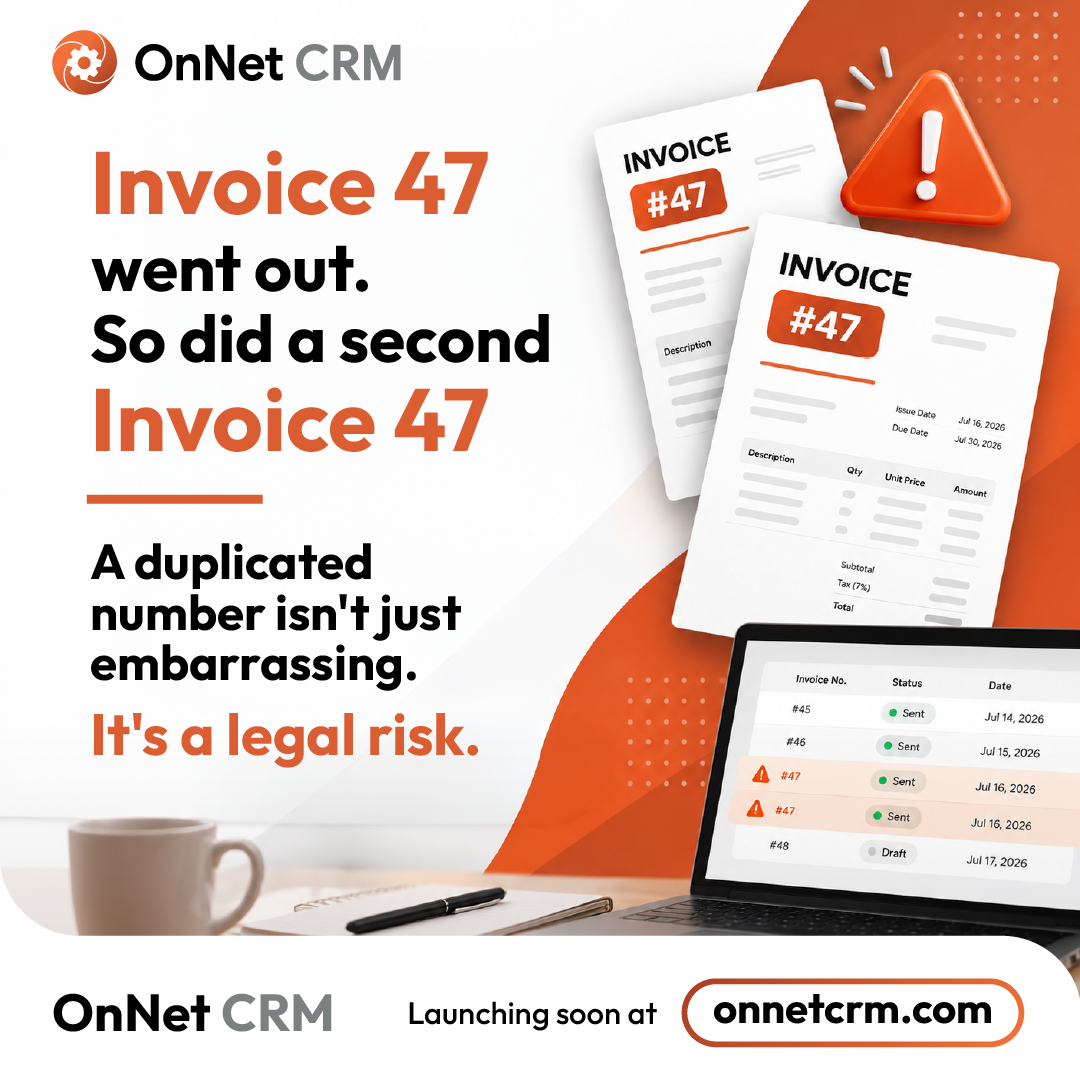
Invoice 47 went out on a Tuesday. A second invoice 47 went out on Friday, generated by a different team member using the same Word template, who did not know the first had already been sent.
Two invoices. Same number. One client thinks she has been billed twice. The other is confused about which invoice is valid. The accounts team has a problem.
This is not a hypothetical scenario. It happens in agencies that manage invoice numbering manually — through Word templates, through separate spreadsheets, through an informal agreement that one person tracks the sequence. It happens because the system for preventing it relies on human coordination rather than a technical constraint.
Manual invoice numbering does not prevent duplication. It relies on nobody making a mistake at the moment they assign a number. Under normal operational conditions, with multiple team members generating invoices across different days and channels, that reliance is not reliable.
The consequences extend beyond the client relationship. In markets with strict VAT reporting requirements — including Thailand and the Nordic markets — an invoice sequence that contains duplicate or missing numbers creates a compliance gap. Tax authorities reviewing a business's invoicing record expect a clean, sequential series. A broken sequence requires explanation, and the explanation takes more time and professional support than the original system was worth.
The fix is technical, not organisational. A central system that assigns invoice numbers automatically cannot produce a duplicate. It cannot skip a number. It cannot be overridden.
This is what legal-grade invoicing means in practice. OnNet CRM delivers it from the first invoice, as a standard feature of every plan.